
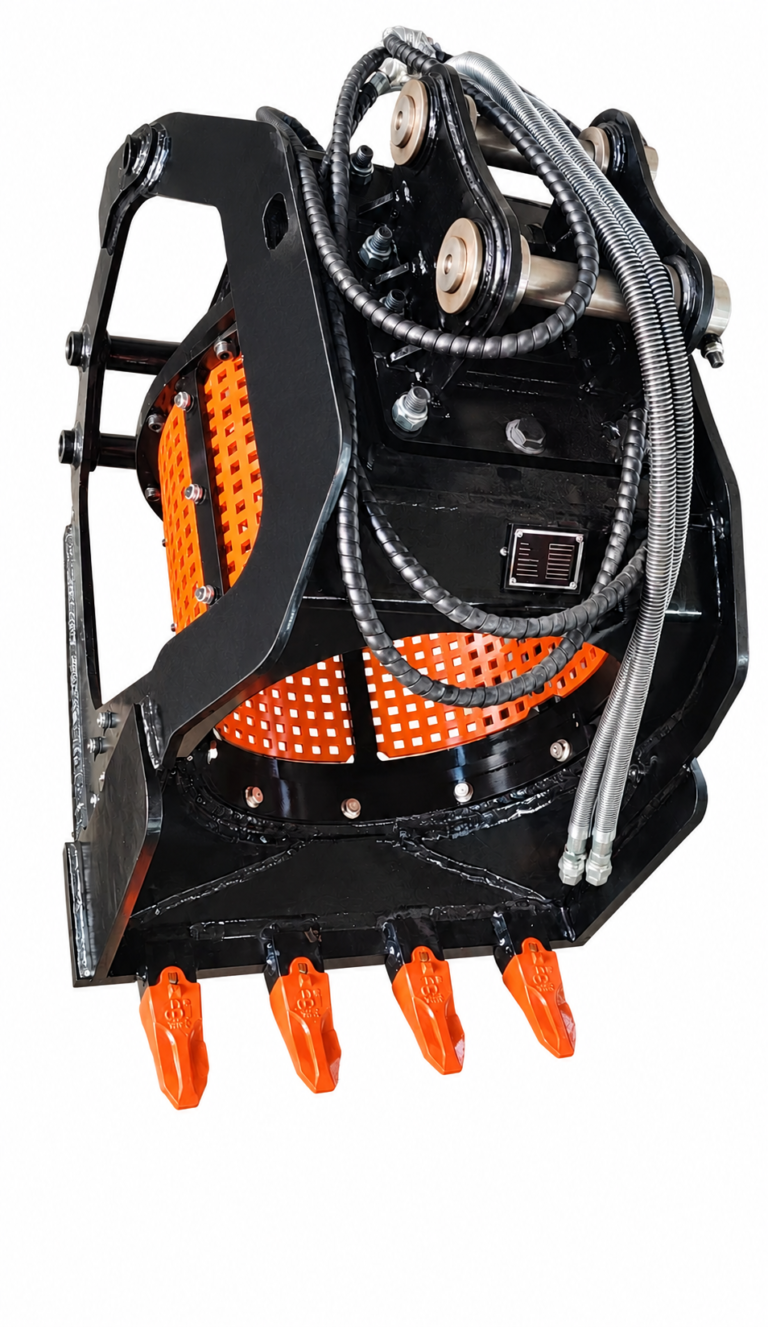
Rotary Screening Bucket
Screening Buckets For Excavator
Separate rocks and debris from loose soil—right on your jobsite.
TOOSAN screening buckets help excavators sort mixed materials during excavation, site cleanup and backfilling. The open-bar design allows smaller material to pass through while retaining larger stones and debris.
Also known as skeleton buckets or riddle buckets, these attachments offer a straightforward way to separate reusable material without a powered screening mechanism.
Send us your excavator model, material photos and required screening size. We’ll help you choose a suitable bucket and mounting setup.
Screening Bucket Features & Performance
Separate Material During Excavation
Screen loose soil, stones and mixed excavation material as part of the digging and handling process. Smaller particles pass through the gaps while larger pieces remain in the bucket.
Recover Suitable Material for Reuse
Separate usable material for landscaping or backfilling where project specifications allow. This can reduce the amount of mixed material sent away and the need to bring in replacement fill.
Simple Operation
A fixed screening bucket uses the excavator’s bucket movement to separate material. The screening mechanism requires no hydraulic motor or additional hydraulic circuit.
Bar Spacing Matched to Your Material
The gap between the bars determines the approximate separation size. Wider spacing releases larger material; narrower spacing retains more material but may slow screening.
Accessible for Inspection and Cleaning
The open structure makes it easier to inspect the bars and remove trapped material. Regular checks should cover the teeth, cutting edge, bars, welds and mounting points.
Screening Bucket Applications
-
Separating stones from loose soil.
-
Sorting suitable excavation material for reuse.
-
Removing larger debris during site cleanup.
-
Preparing material for landscaping.
-
Separating coarse material before further processing.
Performance depends on moisture, particle shape and material composition. Wet clay, roots and tangled debris can block the gaps and require additional cleaning.
Screening Buckets for CAT, Komatsu, Hitachi, Volvo, JCB and Other Excavators
Choosing a screening bucket involves more than matching excavator tonnage. Bucket weight, capacity, bar spacing and mounting dimensions all affect suitability.
TOOSAN helps you check the pin diameter, pin centres and dipper width—or your quick coupler specifications—before confirming the attachment.
Excavator brand names are used for compatibility reference only. TOOSAN is an independent attachment supplier and is not affiliated with these manufacturers.
Screening Buckets Size Guide
| Excavator weight | Typical work | Key selection points |
|---|---|---|
| 1–3 tonnes | Gardens, landscaping and small cleanup jobs | Keep bucket weight and capacity suitable for a small machine. |
| 4–8 tonnes | Residential excavation and utility work | Balance screening width, capacity and handling ability. |
| 10–15 tonnes | General earthworks and material sorting | Match bar spacing to the material you want to recover. |
| 18–25 tonnes | Larger excavation and site cleanup | Check loaded bucket weight, material density and mounting dimensions. |
| 30 tonnes and above | Larger-scale material handling | Confirm machine limits, structural requirements and working conditions. |
Screening Bucket FAQ
What is a screening bucket used for?
A screening bucket separates smaller material from larger stones and debris. Fixed-bar buckets are commonly used for coarse separation during excavation, landscaping and site cleanup.
What is the difference between a skeleton bucket and a rotary screening bucket?
A skeleton bucket separates material through fixed gaps using the excavator’s movement. A rotary screening bucket uses a powered rotating drum. The suitable choice depends on the material, required separation size and working conditions.
Does a fixed screening bucket need extra hydraulics?
The fixed screening mechanism does not need an additional hydraulic circuit. A hydraulic quick coupler, if fitted, has its own operating requirements.
Can it screen wet soil or clay?
Wet, sticky material can bridge across the gaps and reduce separation. Share photos or a video of your material so we can discuss whether a fixed-bar bucket suits the job.
How do I choose the bar spacing?
Start with the size of material you want to retain or release. Particle shape also matters: long or flat pieces may pass through differently from rounded stones.
Will it fit my excavator?
Fit must be checked against your excavator or coupler dimensions. Send the machine brand and model, pin diameter, pin centres and dipper width. Machine tonnage alone does not confirm compatibility.
